Harnessing Creativity: Inspiring Environmental Change Through Climate Change Art
Climate change is undeniably one of the greatest challenges of our time, but can a brushstroke or a sculpture truly make a difference? From canvases to conservation, the impact of climate change art on global warming awareness is proving that the answer is yes. Climate change art, often interwoven with themes of environmental art and sustainable art, serves not only as a medium for beauty but also as a powerful tool for climate change awareness. These pieces stir emotions, provoke thoughts, and inspire action, creating a bridge between art and environmental activism.
One poignant example is the rise of eco art, a genre dedicated to reflecting the realities of our planet's plight. Consider Olafur Eliasson’s melting ice sculptures, which vividly depict the rapid melting of polar ice, starkly demonstrating the effects of global warming right before our eyes. Viewers are not merely onlookers; they become participants in witnessing the urgency of the climate crisis. It's art for climate action at its finest, reminding us that the planet's fate hangs in the balance. How can we stand idle when the very icebergs of our world melt away in front of us?
Storytelling through environmental activism art lends a voice to the often-muted cries of nature. With each brushstroke, artists like Maya Lin, whose 'What is Missing?' project laments the loss of biodiversity, foster deeper environmental awareness among the public. The potency of these works lies in their ability to foster a personal connection to the environmental issue at hand. When the message of climate justice art is internalized, it transforms passive observers into active voices for change. The consciousness raised by such creations drives home the importance of habitat preservation art, which seeks to protect the very foundations of our ecosystems.
Art for sustainability serves as both a call to action and a hopeful vision of the future. Take for instance the use of recycled materials and environmentally friendly practices in the creation of art, emphasizing the principles of conservation art. Artists like Eve Mosher, who created 'HighWaterLine,' a public art piece marking projected future sea levels in coastal cities, translate scientific data into visual narratives that the public can easily understand and remember. This blend of creativity and environmental protection art encourages a collective push towards more sustainable living practices.
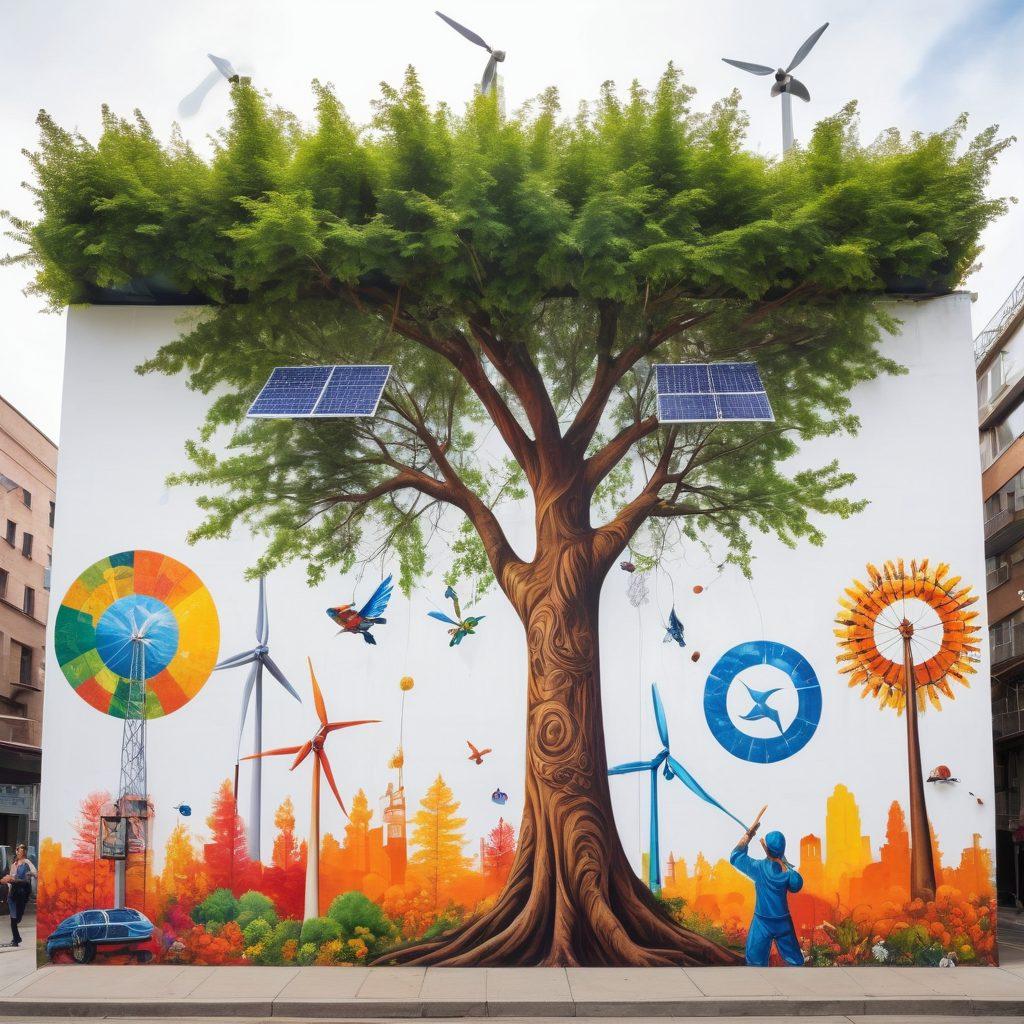
The influence of art against global warming extends beyond galleries and museums. Public installations, eco-conscious art fairs, and climate resilience festivals are creating communal spaces where people can engage with art for environmental change. These platforms foster dialogue and cooperation, transforming spectators into advocates for a greener planet. Initiatives like graffiti and street art for climate advocacy highlight the immediacy of the climate crisis and the need for robust climate action now. These vibrant forms of art for ecological awareness ensure that the message of conserving our planet and promoting environmental justice reaches every corner of society, igniting a spark for a better, sustainable future.
Eco Expressions: How Artists are Using Their Craft to Promote Environmental Sustainability and Climate Resilience
Take a moment to imagine a world where every brushstroke, every sculpture, every piece of art resonates deeply with the call for climate action. From bold installations in urban spaces to subtle yet poignant paintings, artists around the globe are harnessing their creativity to promote environmental sustainability and climate resilience. This marriage of art and activism, often referred to as 'eco art' or 'climate change art,' is becoming an influential force in the global fight against environmental degradation.
Artists have always been the voices of their generation, translating complex issues into compelling narratives that reach the hearts and minds of the public. As global warming accelerates and environmental concerns mount, eco-conscious artists are stepping up with works that spotlight our planet's fragility and resilience. Through art, they convey a sense of urgency and rally people to become active participants in the movement for climate action. How does an artist's canvas become a battleground for climate justice? It starts with a deep connection to the natural world and a desire to preserve it.
One of the most impactful aspects of climate change art is its ability to communicate complex environmental issues in a visually arresting way. Pieces like Olafur Eliasson's melting icebergs on city streets or street murals depicting wildlife loss due to habitat destruction bring global warming awareness to the forefront. Such pieces do more than simply raise environmental awareness; they evoke powerful emotions and compel viewers to rethink their relationship with the environment. As British artist David Buckland once said, 'We use art as a punctuation point for discussions about the future of the planet.'
Moreover, sustainable art practices are also gaining popularity among artists who seek to minimize their ecological footprint. Using recycled materials, natural pigments, and sustainable processes not only makes the art eco-friendly but also serves as a statement on reducing waste and promoting a circular economy. These artists are not just talking about sustainability; they are embodying it in their creation process. Have you ever wondered what a sculpture made entirely of ocean plastics can tell us about our consumption habits? It's a pointed reflection on the need for systemic change.
Art for environmental change doesn't just stop at raising awareness—it also contributes to community building and advocacy. Projects such as 'Nature Conservancy’s Artists for Conservation' program or 'Environmental Graffiti's' public art initiatives involve local communities in creating and appreciating art, fostering a collective sense of responsibility and action towards protecting the environment. Through conservation art and habitat preservation art, these community-driven initiatives advocate for tangible solutions to climate resilience and environmental justice. In a world increasingly dominated by screens and digital interactions, the tactile, communal nature of this art fosters a profound connection to the Earth's well-being.
Artistic Activism: Inspiring Climate Action Through Environmental and Eco-Friendly Art
Imagine walking into a gallery where every stroke of paint, every sculpture, and every installation shouts out in urgency about the planet's suffering. Places where art is not just for admiration but for awakening. This is the world of climate change art—a powerful medium using environmental art to inspire action, stir global warming awareness, and foster a deep connection between the audience and the pressing climate crisis. Artistic activism has emerged as a pivotal force in addressing ecological concerns, blending creativity with advocacy to spark climate change awareness and ultimately lead to tangible action.
Climate change art, also known as eco art or sustainable art, transcends traditional boundaries, urging viewers to confront the realities of global warming. It speaks in a universal language, devoid of political barriers, making the message of environmental awareness accessible to all. Eco-friendly art installations and projects stand as monuments of our current environmental challenges, from melting glaciers to endangered species, capturing the urgency and complexity of the climate crisis through an emotional lens. These artistic expressions don't just depict the problem—they often offer solutions and inspire audiences to envision a greener planet.
Take, for instance, Olafur Eliasson's 'Ice Watch,' where chunks of Greenlandic ice were installed in various cities around the globe, physically bringing the melting Arctic to urban doorsteps. Such immersive experiences leave an indelible mark, deepening one’s understanding of the impact of global temperature rise. Beyond beautiful visuals, this type of environmental activism art compels people to ponder critical questions: How can we mitigate climate change? What steps are we willing to take for a sustainable future? By engaging the public emotionally and intellectually, art for climate action turns passive observers into active participants in the fight against global warming.
Moreover, the power of climate justice art lies in its ability to highlight the disproportionate effects of environmental degradation on marginalized communities. Artists like Zaria Forman, who captures the sublime beauty and tragic impermanence of Arctic landscapes, blend aesthetic appeal with a poignant commentary on environmental justice. Her work reminds us that the climate crisis is not just a fight for nature but a fight for humanity, urging us to champion environmental protection art not only for the planet's sake but for the sake of equitable human existence. This art for climate advocacy bridges the gap between climate resilience and social justice, making a compelling case for collective action.
In the realm of habitat preservation art and biodiversity art, creatives echo the call for conserving the delicate tapestries of life that weave through every ecosystem. For lifelong environmental advocate and artist Maya Lin, her 'What is Missing?' project utilizes innovative multimedia to create a global memorial to extinct species and habitats. As viewers engage with these poignant depictions of loss, they’re nudged towards climate action and the protection of remaining biodiversity. This form of art for the environment seamlessly blends beauty with urgency, urging us all to rethink our roles in the conservation conversation and strive for art for a green planet.